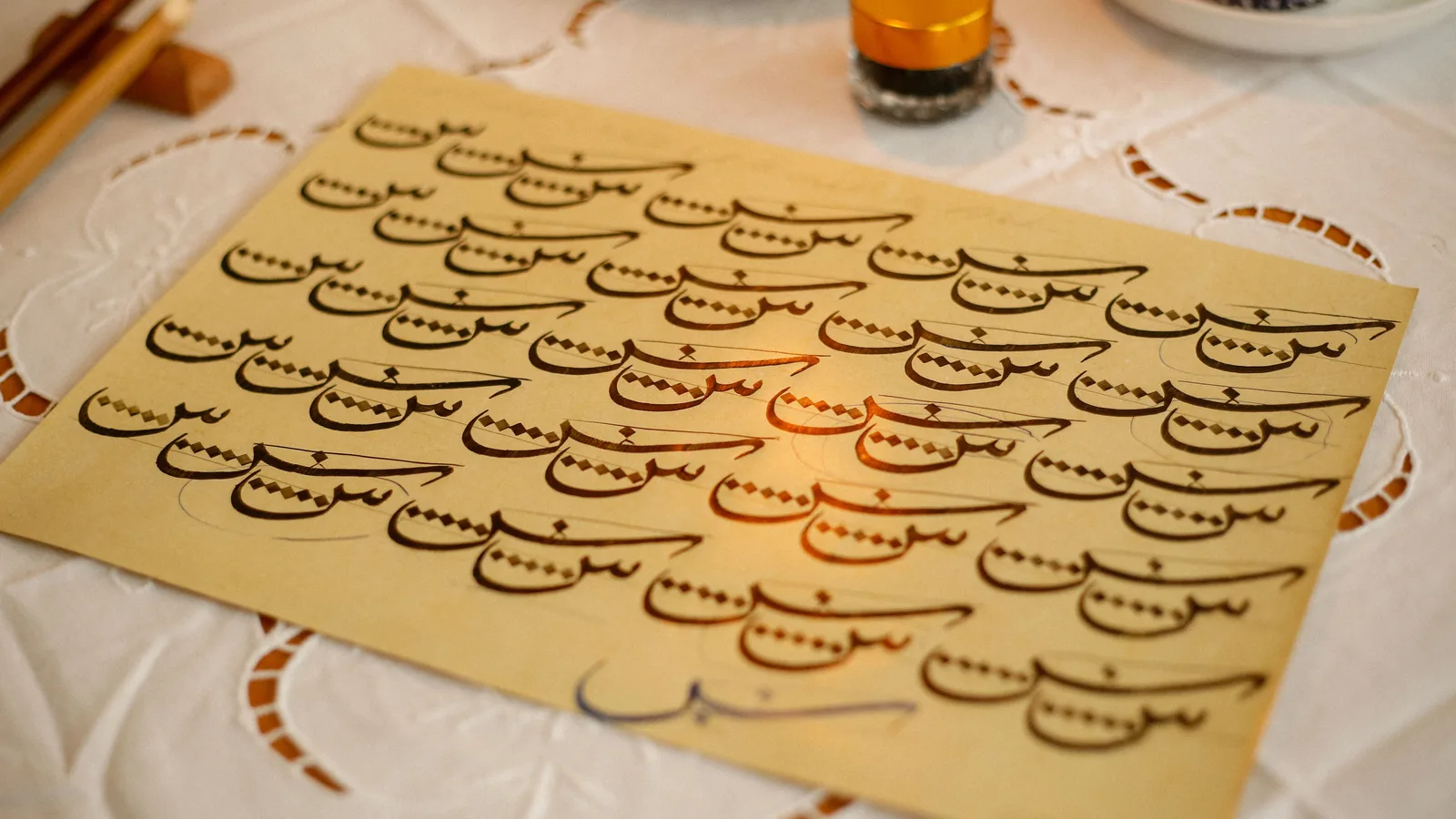
Reading, or speaking: they are not the same course
Arabic Lessons Philippines: one path for reading, one for Riyadh
Arabic lessons in the Philippines at Eduline start from your goal: Qur'anic reading with comprehension for madrasah and ALIVE learners, Modern Standard Arabic for study, or spoken Gulf Arabic for work abroad. One child recites in class and understands none of it; another learner leaves for Riyadh in four months. The first question is always which one you are.
4.6 out of 5Average rating from 76 reviews for this program
Program Guide
What is
Arabic lessons
One-to-one Arabic, taught as one of three different things depending on the goal: reading and understanding Qur'anic and classical Arabic, Modern Standard Arabic for study and formal use, or spoken Gulf dialect for work abroad. All three share the alphabet and diverge sharply after it: a learner who wants to understand what they recite and a learner who needs to be understood in Doha will be doing different work within a month. The goal decides the material, so we ask for it in one sentence before any book is opened.
Key Points
1
Qur'anic and classical reading, with comprehension
2
Modern Standard Arabic for study and formal use
3
Spoken Gulf dialect for work abroad
4
Support for madrasah and ALIVE classwork
5
Hourly rate confirmed before the first lesson is scheduled
Learning Formats
Two ways to run it
Both used, and the choice matters more here than on most pages
1
Online
Often the only practical option, because Arabic tutors are concentrated in a few areas and most learners live outside them. Script work transfers well to a shared screen, and recitation and pronunciation come through clearly enough to correct.
45-60 minutes
Reaches learners far from any Arabic tutor
Script work on a shared screen
Recitation and pronunciation correctable
2
At your home
The usual choice for younger children, with an Arabic tutor matched to your area. Handwriting in particular is easier to correct in the same room, since Arabic script is written in a direction the child's hand has not learned. A young child's attention for new script rarely runs the full visit in one stretch, so the time is split into shorter rounds of reading, writing and recitation with a real break between them.
90 to 120 minutes
Handwriting corrected directly
Easier for young children
A parent or guardian can sit in
Reasons to Choose Us
How we teach this
Beginning with one question: what is the Arabic for?
01
The goal is agreed before the material
Qur'anic reading, school Arabic, formal study and Gulf dialect are four courses. Asking which one you want takes a minute and prevents months of work on the wrong one. Should the goal shift, say from Qur'anic reading to Gulf dialect ahead of a deployment, you can ask for a tutor suited to the new course, and the change costs nothing.
02
Comprehension taught with recitation
For learners who read the script accurately and follow none of it, meaning is built on the text they already read. Familiar material makes understanding arrive far faster than a beginner reader would.
03
Dialect chosen by destination
For workers heading abroad, the country decides the Arabic. Being understood in the place you are actually going is the whole purpose, and it is not what a general course delivers.
04
The script gets the weeks it needs
Letters that change shape, a direction the hand has not learned, sounds with no local equivalent. Hurrying this stage is the most common cause of a reader who never becomes fluent.
05
We follow the school's lessons
For a learner in a madrasah or an Arabic class, the work is what the class is doing. Running a separate syllabus alongside a struggling learner only adds load.
06
The rate follows the course you actually need
Qur'anic reading, madrasah support, Gulf dialect and Modern Standard Arabic each carry their own hourly rate, since they sit at different levels, and a tutor traveling to a home in Metro Manila is paid differently than the same hour delivered online or at a home in a provincial town. Name the course and where the tutor travels to, and that number is put in writing before you book.
Progression Path
Four goals, four different courses
Tell us the goal and the content follows from it
1
2
3
4
Usually a child, often already recitingReading and understanding Qur'anic Arabic
Arabic as part of the school weekKeeping up in madrasah or an ALIVE class
Leaving for the Gulf, often with a dateSpoken Arabic for work abroad
Study, formal writing, or reading the newsModern Standard Arabic
1
Reading and understanding Qur'anic Arabic
Usually a child, often already reciting
The most common request on this page, and the one with a specific gap attached. Many learners can decode the script and recite accurately while understanding almost none of the meaning, because decoding and comprehension are taught at different times if they are taught together at all.
Subjects
The script, read accuratelyVowel marks and what happens without themVocabulary that recurs constantlyGrammar enough to follow meaning
Focus Areas
Comprehension alongside recitation
Patient with the script stage
Respectful of how the learner already studies at home and in class
2
Keeping up in madrasah or an ALIVE class
Arabic as part of the school week
For learners doing Arabic at school and falling behind in it. The work is whatever the class is doing, at a pace that lets the learner catch up with the class.
Subjects
Whatever the class is currently onGaps from earlier that were never closedWritten work to the standard expectedAssessments, when they come
Focus Areas
Follows the school, does not compete with it
Earlier gaps found and closed
No separate curriculum added
3
Spoken Arabic for work abroad
Leaving for the Gulf, often with a date
A completely different course from the two above, and usually under time pressure. The priority is being understood at work and in daily life, which means the spoken dialect of the place you are going.
Subjects
Spoken dialect for the country you are going toWorkplace vocabulary for your actual jobDaily life: housing, shops, transport, healthCourtesy, which carries weight there
Focus Areas
Speaking and listening only
Scoped to the departure date
Useful before complete
4
Modern Standard Arabic
Study, formal writing, or reading the news
The written and formal language shared across the Arab world. The right choice for academic study and for reading and writing. Everyday conversation runs in spoken dialects, so a learner heading for the Gulf starts with the spoken Arabic level above.
Subjects
Grammar built systematicallyReading formal and printed ArabicWriting to a standardVocabulary for lectures and reading
Focus Areas
Structured and cumulative
Reading and writing weighted
Matched to study and literacy goals
Program Curriculum
What sessions cover
Assembled from each learner's goal
The script is shared by all four goals and almost nothing after it is. A learner heading to Doha and a learner preparing for a madrasah assessment should stop sharing a lesson plan in about week three.
Letters that change shape by position, writing in a direction the hand has not learned, and sounds that do not exist in Filipino or English. Slow at the start and worth the time, because a shaky foundation here costs years.
Topics covered
Letters in all their positions
Sounds with no local equivalent
Handwriting, which takes real practice
Reading without sounding out
Service Coverage
Where this is available
Online Tutoring
Anywhere with enough signal, including for those already in the Gulf
The format most learners on this page choose, since it brings a specialist Arabic tutor to any address in the country. Script work shares well on screen, and recitation and pronunciation carry clearly enough to correct properly.
Reaches areas with no Arabic tutor
Script work on a shared screen
Pronunciation corrected as it happens
Timezone: Philippine Standard Time (UTC+8) by default, and Gulf hours on request
In-Person Tutoring
At home, for young children learning the script
Home visits give a young child a tutor at the table while the hand learns to move right to left. Qur'anic recitation and Gulf dialect are specialist skills, so each home match is made to a tutor who teaches that exact variety.
Who This Program Serves
Who this is for
Five situations under one program name
The most common enquiry here. Decoding is in place and meaning is still missing. That is a specific, fixable gap, and it says nothing about how hard the child is trying.
Recommended:
Comprehension built on familiar textHigh-frequency vocabulary firstRecitation respected and built upon
Arabic is part of the school week and the marks are slipping. We follow the class closely, and look for the earlier gap that is usually underneath it.
Recommended:
Follows the school's materialEarlier gaps found firstWritten work to the expected standard
Usually with a date and a job. Spoken dialect, scoped to the departure, aimed at being understood from the first week in the country.
Recommended:
Dialect for your destinationYour job's vocabularySpeaking and listening only
Common, and entirely reasonable. The script takes real time for an adult hand and eye, and rushing it produces a reader who never becomes fluent.
Recommended:
Script given the time it needsHandwriting practiced properlyGoal agreed before the material
For academic study, formal reading and writing. Modern Standard Arabic is the right answer here and the wrong answer for conversation, and we will say which you are asking for.
Recommended:
Modern Standard ArabicGrammar built in orderReading and writing weighted
6
common pitfalls
What goes wrong
Six ways Arabic study goes sideways
Most of them are a mismatch between what was taught and what was wanted
01
Reading fluently, understanding nothing
Why it happens
Decoding the script and understanding the words are separate skills, and a learner can be genuinely good at the first for years while the second never starts. It usually surfaces the day someone asks the learner what a passage meant.
Our solution
Add comprehension to text the learner already reads. Meaning arriving in familiar material is enormously more motivating than meeting it in a textbook.
02
Studying formal Arabic before flying to the Gulf
Why it happens
Modern Standard Arabic is what books and courses teach, and it is not what anyone speaks at home or on a site. A worker who prepared with it arrives able to read a sign and unable to follow a sentence.
Our solution
Learn the dialect of the country you are actually going to, and accept it will not look like the textbook. Being understood in four months matters more than being correct in two years.
03
Treating Gulf Arabic as one language
Why it happens
Saudi, Emirati, Qatari and Kuwaiti speech overlap heavily and are not identical, and Levantine or Egyptian Arabic (which is what many available materials teach) differs more again.
Our solution
Name the destination country before choosing material. The overlap is large enough that the effort is not wasted, and large enough that people rarely check, which is how learners end up practicing the wrong one.
04
Never getting past marked text
Why it happens
Beginner Arabic carries the short vowel marks and real Arabic largely does not. Learners who only ever practice on marked text hit a wall the first time they open something ordinary and conclude they cannot read after all.
Our solution
Start removing the marks deliberately and early, on text already known. It is a recognition skill built by exposure, and postponing it only makes the wall higher.
05
Rushing the script
Why it happens
The alphabet feels like an obstacle before the real learning, so it gets hurried. Letters that shift shape by position and sounds with no local equivalent do not survive being hurried, and the shakiness shows up much later as slow reading.
Our solution
Give the script the weeks it needs, handwriting included. Nearly every learner who reads slowly years later was moved on from this stage too quickly.
06
A course chosen before the goal was named
Why it happens
Qur'anic reading, school Arabic, formal study and Gulf dialect are four different courses, and a tutor who starts before asking will teach whichever they know best. The learner then works hard at something adjacent to what they wanted.
Our solution
Say the goal in one sentence before any material is chosen: read and understand, pass the class, or work in Dubai. It takes a minute and it decides everything after it.
The first two are the expensive ones, and both come from the same source: the word Arabic covering several languages that a learner has no way of telling apart before they start.
One hour, priced by level and by how the session runs
The figure above is where the earliest level on this page starts
From
₱500 / hour
Home visit, Metro Manila
₱700 / hour
Online
₱500 / hour
Home visit, provincial areas
₱500 / hour
Per hour, one tutor with one learner. Home visits run at least 1.5 hours. Packages: 12 hours at 5% off, 24 hours at 10% off.
A child beginning with the alphabet, an adult already reading who is building comprehension, and a worker who needs only spoken phrases before a flight are not at the same level, and the rate moves with the level as much as with the subject. It moves again with the session itself: a home visit in Metro Manila is priced above a home visit in a provincial area or an online class, which share one rate for the same level, and since Arabic tutors placed for home visits are fewer than for a general subject, online is what most learners on this page end up choosing. Most learners here book once or twice a week, and a worker with a flight already booked sometimes doubles that to cover more ground before leaving.
FAQ
What Arabic learners ask
The first two decide which course you are actually buying
01
Reading Arabic fluently and understanding little of it: is that normal?
It is extremely common, and effort has nothing to do with it. Reading Arabic script and understanding Arabic are separate skills, and a learner can become genuinely accurate at the first while the second has barely begun, particularly where recitation is practiced daily and vocabulary is not taught alongside it. The fix builds comprehension on the text the learner already reads, beginning with the words that recur most, so meaning starts appearing in material that is already familiar.
Other questions
Related Programs
Programs that sit beside this one for the same learner
Reading and understanding, keeping up in class, or working in the Gulf, and if it is the last one, which country. One sentence decides the whole course. A tutor who knows all three paths reads your note and names the one you are really asking for.