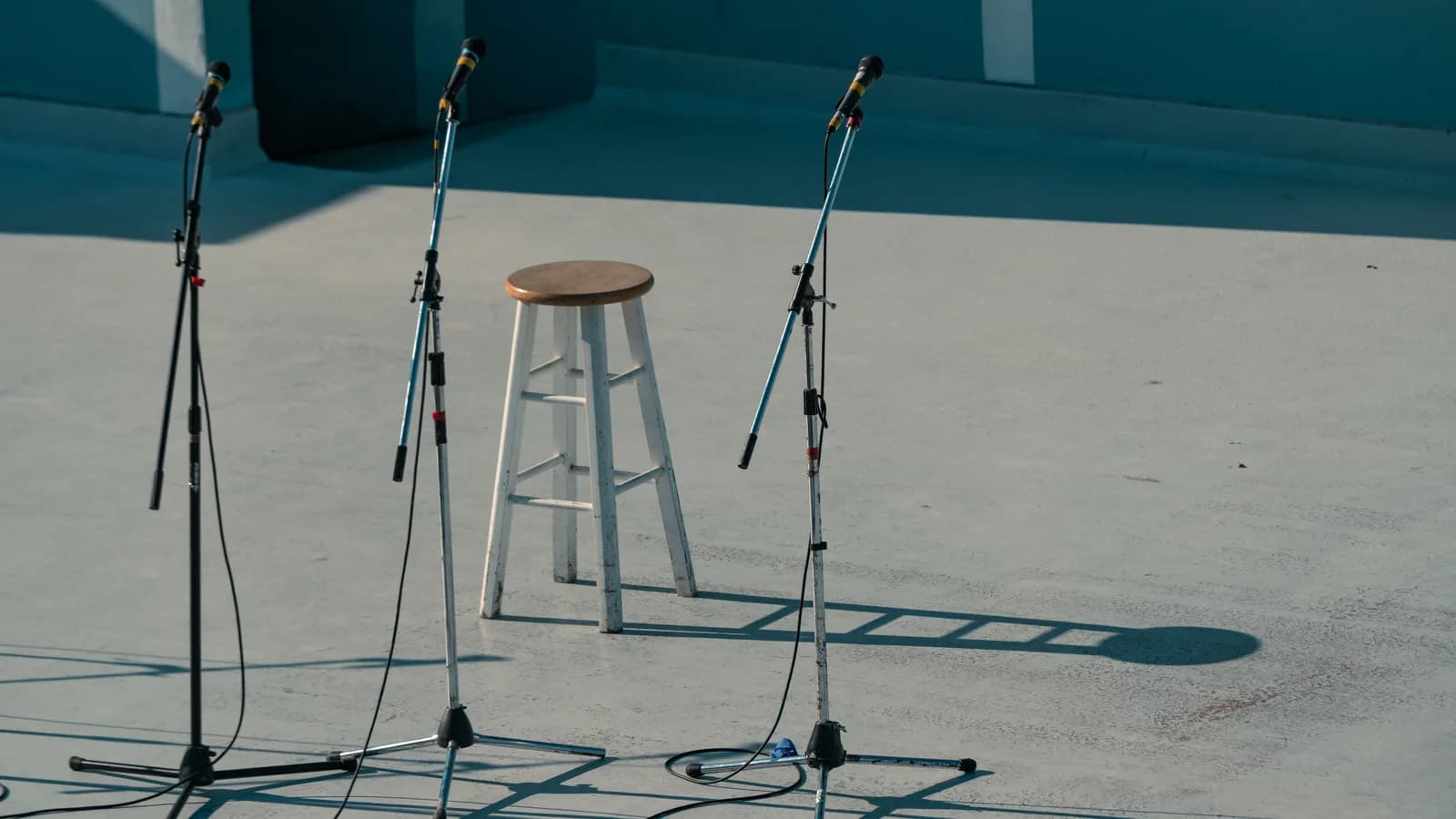
Public Speaking Lessons Philippines, rehearsed out loud with one listener
Public speaking lessons in the Philippines at Eduline pair one tutor with one learner for oral reports, declamation pieces and contest runs, and almost every minute goes to speaking aloud, being stopped and going again. Speaking is the one subject nobody can practice quietly, so the learner gets room to be awkward until the awkwardness is gone.
4.8 out of 5Average rating from 51 reviews for this program
What is
Public speaking lessons
One-to-one practice in speaking to other people: structuring what you want to say, delivering it so it can be followed, and managing the nerves that arrive with it. It is a rehearsal subject: almost all of the session is spent speaking aloud, being stopped, and going again.
Key Points
For school reports, declamation and contests, and for the learner who simply freezes when called on
Not an English class. Learners with strong English can still be very hard to follow
Sessions are mostly rehearsal: the learner is on their feet and speaking for most of the hour
Recorded where the learner agrees to it, because hearing yourself is most of the progress
What you pay scales with which starting point fits best, and whether a tutor visits or meets online
Learning Formats
How the sessions run
Either format works here, and they are useful for different reasons
1
At your home
Speaking to a person in the room, which is what the school assembly and the classroom actually are. The ninety minutes runs as several shorter attempts with a break between them, and it is where posture, gesture and holding a room get worked on directly.
90 minutes
Standing up and delivering out loud
Eye contact, stance and gesture worked on directly
A real audience of one, which is where confidence starts
2
Online
Closer to how a great deal of speaking now happens: a camera, a class call, an interview. Also easier for a self-conscious learner to begin with, because a screen is less exposing than a room.
60 minutes
Recording is simple, and replay is where the progress is
Good for camera presence and online presentations
A gentler starting point for a very nervous learner
3
Before a specific date
A contest, a graduation speech, a defense, a job interview. Short and dated: rehearse the actual material until the delivery holds up every single time.
60-90 minutes
Rehearsing the real piece, word for word
Run under the actual time limit
Contingencies practiced: losing your place, a question you did not expect
Reasons to Choose Us
Why one to one for this
Speaking is the subject a class serves worst, and it is worth saying why
01
You get the whole hour of speaking
In a class of fifteen, each learner speaks for a few minutes and watches for the rest. For a nervous learner the watching is the worst part, and they are paying for it.
02
Room to be bad at it first
Nobody improves at speaking without being awkward out loud for a while. That is much easier in front of one person who is expecting it than in front of classmates who are not.
03
Your own material
The actual oral report, the actual contest piece, the actual interview. Generic exercises are easier to teach and less use on the day.
04
Recorded, with your agreement
Hearing yourself is most of the progress. Nothing is recorded without the learner agreeing, and recordings stay inside the session.
05
Committed to the practice
We commit to the practice and the fit, week after week: a free tutor replacement whenever you ask, and a clear review each time a milestone lands, so you always know what the sessions have built.
06
The rate comes before the booking
Stack the hours for a contest run, and each one costs less than a single session.
Tiered Program
Where learners usually start
The difference here is temperament and purpose, at any age or grade
01
Freezes when called on
The most common reason anyone books this
A learner who knows the answer and cannot get it out. The first sessions are not about speeches at all: they are about speaking at length to one person without the fear arriving, which has to come before any audience does.
Subjects
Speaking at length
Managing nerves
Answering aloud
Being heard
Focus Areas
One listener before any audience
Short successes, repeated often
Volume and pace, which nerves wreck first
02
Has to present for school
A graded oral report or defense
Competent enough, but the score depends on delivery and nobody has ever taught delivery. Usually the fastest visible improvement of any program we run, because the gap is technique, and technique is teachable.
Subjects
Structuring a talk
Slides that help
Delivery
Handling questions
Focus Areas
Opening and closing, which carry most of the impression
Speaking from short notes, eyes up
Rehearsal under the real time limit
03
Competing
Declamation, oratorical, debate
A different discipline again: memorized or argued material, judged against criteria, in front of people who are also judging. Coaching here is detailed and repetitive, and the learner has to want it.
Subjects
Interpretation
Projection
Memorized delivery
Argument under pressure
Focus Areas
Working to the contest's own criteria
Repetition past the point of comfort
Recovering when a line goes
04
Already speaks well
Wants to be genuinely good
The learner who is fine and knows it. The work is extension: persuasion, timing, humour, holding a room that is not obliged to listen. Badly served by a class, because a class works to the middle.
Subjects
Persuasion
Timing and pause
Storytelling
Reading a room
Focus Areas
Going further with every run
Material chosen by the learner
A coach who can still find the flaw
Content Map
What gets practiced
Chosen from the first session: most learners need two or three of these five
This is a rehearsal subject. If a session is mostly the tutor talking, it is the wrong session, and you should tell us.
01
Module 01
Having something to say
Structure before delivery. A clear talk badly delivered survives; a muddled talk delivered beautifully does not.
One idea, stated early
Three points, in an order that holds
Openings that are not an apology
Endings that land cleanly
02
Module 02
Being followed
Rhythm decides whether a talk is easy to follow. Most learners run every sentence at one speed and drop the pause that would flag the important word.
Slowing down, which never feels slow from the inside
Pausing on purpose
Projection without shouting
Emphasis that carries the meaning
03
Module 03
Nerves
Treated as a physical thing to manage, with breath, pace and posture. Nobody stops being nervous; people learn to speak anyway.
Breathing that steadies the voice
What to do with your hands
The first thirty seconds, rehearsed until automatic
Recovering after losing your place
04
Module 04
Presence
Stance, eye contact and gesture: the part a mirror cannot teach and a recording can, because you cannot see yourself while you do it.
Standing still on purpose
Eye contact across a room
Gesture that means something
Camera presence for online delivery
05
Module 05
Being questioned
Where most school defenses and interviews are actually decided, and the part almost nobody rehearses.
Listening to the whole question first
Saying you do not know, well
Answering briefly then stopping
Staying steady under a hostile question
Learning Modes
Where this is available
Online Tutoring
Anywhere in the Philippines, on a call clear enough for coaching
Online Tutoring
Anywhere in the Philippines, on a call clear enough for coaching
The camera itself is part of what gets taught here, since interviews, class presentations and online meetings already happen this way. A recorded session can be replayed, and hearing your own voice do the thing wrong is usually what makes a correction stick.
Recorded rehearsals, with the learner's agreement
Good for camera presence and online presentations
A gentler starting point for a very nervous learner
Timezone: Philippine Standard Time (UTC+8)
In-Person Tutoring
In a real room, where a voice has to carry
In-Person Tutoring
In a real room, where a voice has to carry
A room gives a coach something a screen cannot: how a voice actually carries, whether the stance holds up, whether the eyes ever leave the floor. Say where the sessions would happen, and the speaking coach who lives nearest you comes to that room.
Available cities:
Who This Program Serves
Who this is for
Four quite different reasons learners come to it
Often mistaken for a language problem or shyness that will pass. Worth addressing, because recitation is graded in Philippine classrooms and the cost accumulates quietly across every subject.
Recommended:
Start one to one, no audienceShort sessionsProgress measured in willingness to stand up
Dated and specific. Rehearse the actual material, under the actual time limit, until the delivery does not depend on the day going well.
Recommended:
Bring the real assignmentRehearse to the rubricHigher frequency, fixed end
Declamation, oratorical or debate, judged against published criteria. Coaching is detailed and repetitive, and it pays off when the competitor is the one who wants the medal.
Recommended:
Work to the contest criteriaRecorded rehearsalsLed by the competitor's own choices
An interview, a pitch, a wedding, a defense. Adults arrange this for themselves and usually have one date in mind, which makes the plan short and unusually concrete.
Recommended:
Evening slotsYour own materialStraight, specific feedback
What a speaking tutor costs per hour
The rate below buys a full hour of one-to-one rehearsal, a tutor whose whole attention stays on your speaker. It starts at the youngest learners' rate; an older student, a competitor, or an adult booking ahead of an interview is priced on the rung for their own stage. Home visits, online calls, and provincial areas each sit on their own row, and hours bought together for a contest run cost less per hour than single sessions bought one at a time.
From
₱400 / hour
Home visit, Metro Manila
₱550 / hour
Online
₱400 / hour
Home visit, provincial areas
₱400 / hour
Per hour, one tutor with one learner. Home visits run at least 1.5 hours. Packages: 12 hours at 5% off, 24 hours at 10% off.
Which row applies (home visit, online, or provincial) and which rung fits the speaker's age and the reason for lessons together set the exact rate. You get it in writing before the first rehearsal is on the calendar.
FAQ
Questions we get asked
Starting with the one nervous speakers ask most
01
I am just shy. Will this actually help, or will it make it worse?
Shyness gets worse when a nervous speaker is put in front of people before the fear has settled, so the first sessions stay well away from a stage. The learner talks to one tutor, about ordinary things, for stretches of time, with nobody scoring the sentences. Only once that feels normal does anything shaped like a speech enter the room, and even then it starts as a few lines to one listener. A learner who is genuinely frightened gets an even gentler start: short sessions at home or on a screen, with the same tutor each time, until talking in front of them feels ordinary.
Other questions
Related Programs
Programs that sit beside this one for the same learner
Say what the occasion is: a school assembly, a contest, an interview, a defense with a date attached. Say too whether the speaker chose this or was signed up by someone else, since a nervous student talked into a contest needs a different plan from one who asked for it. Send that much, and a real person confirms which rate on the table above applies, in writing, before anything is booked.
Get matched with a tutor
Send the details once and we propose a tutor who fits. Nothing is booked until you agree to the rate.