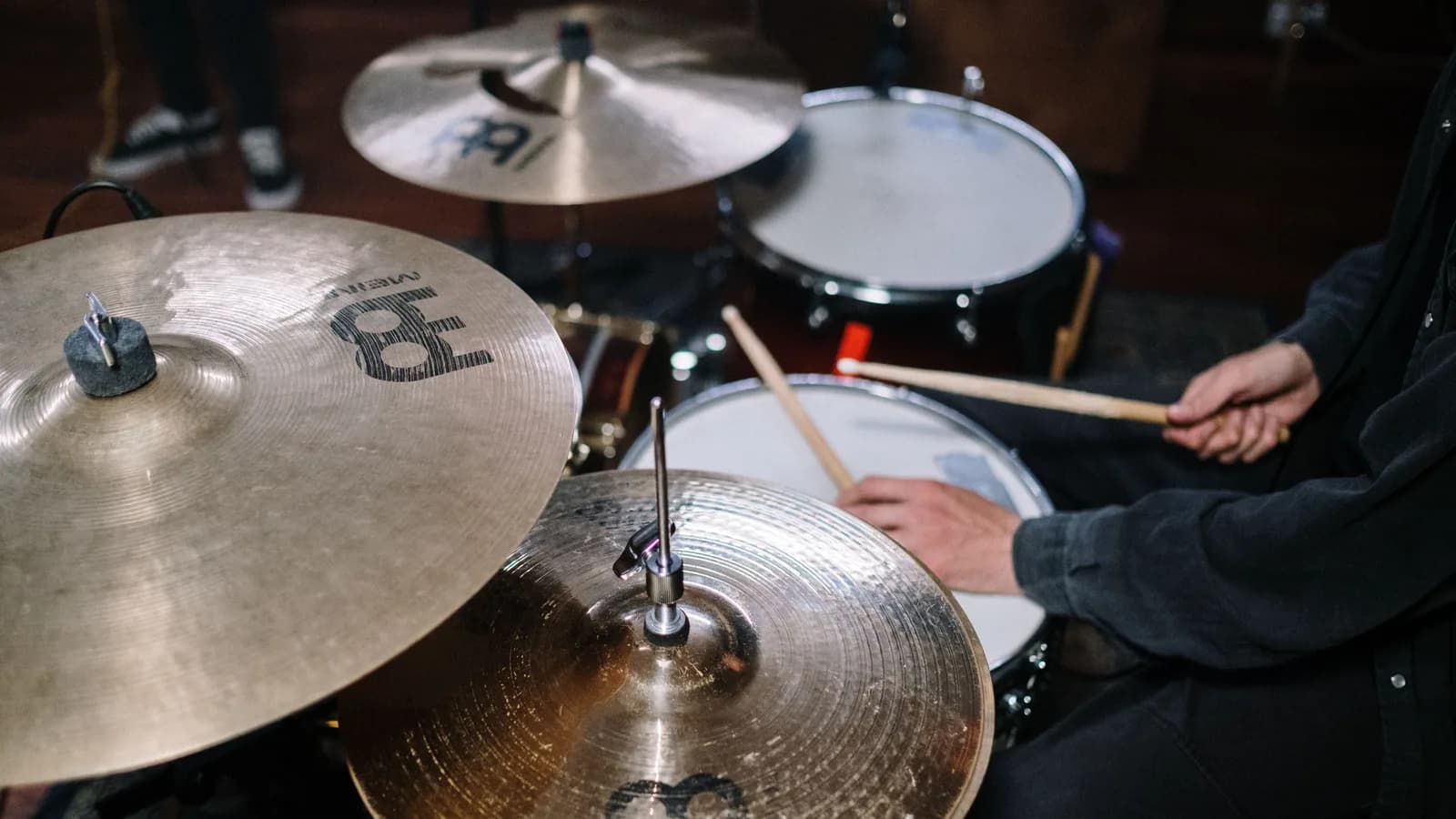
Drum Lessons Philippines, planned around the neighbors from day one
Drum lessons in the Philippines take learners from about age seven, once the feet reach the pedal, through to adults, and every plan starts with home practice. A practice pad, sticks and a metronome app cover the first months quietly, and an electronic kit with headphones keeps a townhouse or condo peaceful, so the learner keeps playing.
4.7 out of 5Average rating from 46 reviews for this program
What is
Drum lessons
One-to-one drum teaching for beginners and improvers, from around age seven upward. Nothing here is graded, examined or reported to a school, which means the test of whether it is working is different, and worth agreeing out loud in the first lesson.
Key Points
No curriculum, no exam, no report card: this is learned for its own sake
The practical barrier in most Philippine homes is noise, and it is solvable
Most useful practice happens on a silent pad
Timekeeping is the skill; everything else is decoration on top of it
The hourly rate is shown on this page, and it rises with the learner's grade level
Learning Formats
Two ways to run it
A kit or a pad already in the room decides this more than any teacher preference does
1
At your home
Works where you have a kit, acoustic or electronic, and somewhere to put it. A teacher in the room can correct grip, posture and the way weight moves through the stick, which are difficult to see properly on a camera and expensive to unlearn later. Ninety minutes covers a warm-up on the pad, work on the kit itself, and a short break partway through.
90 minutes
Grip and posture corrected directly
Playing on your own kit, in your own room
Volume and setup problems seen first-hand
2
Online
Lessons run listen-then-play: the teacher plays a pattern, the learner plays it back, and every take is heard in full. The format is strongest for material, patterns and reading, with the fine feel of dynamics saved for in-person time.
45 minutes
Good for material, patterns and reading
Listen-then-play, take by take
Reaches every province
Reasons to Choose Us
How we teach this
Starting from the practice setup at home
01
We sort out practice before technique
Where and when a learner can make noise decides whether any of this works. So the first conversation settles that, ahead of any kit specification.
02
Time before everything
A drummer who plays simple things steadily is useful to every band they meet. One who plays complicated things unevenly is not. Practice weight goes accordingly, even though it is less fun.
03
A pad is treated as the main instrument
Most useful repetition is silent. That makes daily practice possible in a townhouse, and daily practice is the entire difference between learning this and abandoning it.
04
Songs from week one
Nobody learns an instrument for the exercises. Real music goes in early, even simplified, because motivation is the resource most likely to run out.
05
Nothing here is graded, and we will say what progress looks like
No exam, no certificate, no report card. We agree a concrete marker at the start (usually holding a steady beat for three minutes under a metronome), so there is something real to check against. That marker travels, too: any learner can ask for a new drum tutor free of charge at any point, and the next tutor checks against the same three-minute beat.
06
The rate is shown before you book
The hourly rate for a beginner is shown on this page, no kit needed to look at it. Once we know the learner's grade level and whether lessons run at home or online, we put the exact figure in writing, and that is the number booking goes ahead on.
Program Levels
What actually happens as someone learns this
Four stretches, and the second one is where nearly everybody quits
01
Grip, posture, and one beat
The first months
How to hold a stick so it rebounds off the head by itself, how to sit, and one basic beat played slowly and evenly. It is less exciting than a beginner expects and it decides how far they can eventually go.
Subjects:
Stick grip and reboundPosture and kit heightOne beat, slowlyCounting out loud
Focus Areas:
Slow and even before fast
Bad habits are cheap now and expensive later
Twenty minutes daily beats two hours weekly
02
Where most people stop
The wall
The first beat works, the second one will not come, and practice at home has started causing friction with somebody. Almost every person who gives up does it here, and the cause is almost always practical: where, when and how loud to practice.
Subjects:
A second and third beatCoordination between limbsA practice setup that does not cause argumentsPlaying along with actual music
Focus Areas:
Solve the noise problem or the lessons end
Slow practice with a metronome
One new thing at a time
03
Where it becomes worth it
Playing with other people
Church, a school band, a garage, a barkada with two guitars. This is where drumming stops being an exercise, and it is also where a drummer discovers whether their time is actually steady, because now somebody else is relying on it.
Subjects:
Holding time for other peopleListening while playingCommon song structuresStarting and stopping cleanly
Focus Areas:
Steady beats impressive
Playing quietly is a skill
Learning songs the group actually plays
04
Years, and a different kind of practice
Getting good
Independence between limbs, reading, styles, dynamics and the ability to make a simple part feel good. There is no ceiling here and no certificate either: the marker is what you can play with other people without thinking about it.
Subjects:
Limb independenceReading drum notationStyles beyond rock and worshipDynamics and feel
Focus Areas:
Practice becomes specific and boring
Recording yourself, regularly
Musicality over speed
Learning Phases
What lessons cover
In roughly this order, because each one needs the one before
Nothing on this list is examined by anybody. The honest test of progress is whether a learner can hold a steady beat for three minutes while somebody else plays over it, which is unglamorous, entirely objective, and much harder than it sounds.
Phase1
Hands and feet
4 topics
Grip that lets the stick bounce, a foot that rolls the pedal with control, and a body that is not tense. Unspectacular, and it is what separates a drummer who lasts from one whose wrists hurt at twenty-five.
Grip and natural rebound
Pedal control, heel up and heel down
Posture and kit height
Staying relaxed at speed
Phase2
Time
4 topics
The whole job. A drummer who plays simple things in perfect time will always be asked back; one who plays impressive things unevenly will not. Built with a metronome, slowly, for longer than anybody wants to.
Playing with a metronome
Noticing yourself speeding up
Subdivisions counted out loud
Holding one tempo for whole minutes
Phase3
Beats and fills
4 topics
The patterns that make up most popular music, and the fills between them. Fills are what beginners want and they are the smaller part: a fill that lands late ruins a song a steady beat would have carried.
Core beats across common styles
Fills that land where they should
Coming out of a fill in time
Not over-filling
Phase4
Playing to music
4 topics
Drumming along with recordings, which is how most drummers actually learn. It also exposes timing problems that a metronome lets you talk yourself out of.
Playing along with songs
Hearing song structure
Sitting behind a band and following its lead
Simplifying a part to fit
Phase5
Reading, enough of it
4 topics
Enough drum notation to use a chart or a lesson book, which opens up most material. Not every drummer needs to read fluently and every drummer benefits from not being locked out.
Notation for the kit
Counting from the page
Using a chart
Writing down a part you invented
Phase6
Practicing without a kit
4 topics
Specific to most Philippine households and more important than any other module here. A practice pad, sticks and a metronome cost very little and cover most of what actually needs repetition.
What a pad can and cannot practice
Silent work on hands and reading
Foot work without volume
Making twenty minutes a day possible
Service Coverage
Where this is available
Online Tutoring
Anywhere in the Philippines with a connection steady enough for timing
Strong for material, patterns and reading, taught take by take over a steady connection. It brings a drum teacher to a learner in any province.
Good for material and reading
Take-by-take feedback
Reaches every province
Timezone: Philippine Standard Time (UTC+8)
In-Person Tutoring
At home, beside the kit or the pad
In-person suits this instrument best, since correcting how a stick rebounds off a pad is easier standing beside someone than through a webcam. It requires a kit or a practice pad already in the room. Ask about your barangay, and the drum teacher nearest you is matched.
Who Should Join
Who this is for
Five situations, and the right first step in each
01
A child who will not stop hitting things
Around seven upward, tapping every surface in the house. Drums gives that somewhere to go and, unlike most instruments, produces a recognizable result in the first lesson, which matters at this age.
Good for:Start on a pad, cheaplyShort sessions, real songs earlyDecide about a kit after a few months
02
Someone who plays for church or a band
Already playing, self-taught, and aware that something is uneven. Usually timekeeping and grip, both of which respond quickly once somebody names them.
Good for:Timekeeping diagnosed firstGrip and technique correctedMaterial from the group's own set
03
An adult starting from nothing
Wanted to for years, finally doing it. Adults progress quickly on understanding and slowly on physical habit, and knowing that in advance prevents most of the frustration.
Good for:Realistic expectations, stated earlyPad practice fitted around workSongs you actually like, from week one
04
A learner who has stalled
Plays one or two beats, has not improved in a year, practices occasionally. Almost always a practice-setup problem, and worth diagnosing before more lessons are bought.
Good for:Fix the practice setup firstOne narrow goal at a timeMetronome work, properly
05
Someone who cannot make noise anywhere
A few households genuinely have no hour of the day when a stick on a pad, or a pedal against the floor, goes unnoticed: a shared wall, a neighbor who works nights, a baby who startles if a door shuts too firmly. That is worth solving before anything else, and often a closet with an electronic pad and a pair of headphones is all it takes. The teacher helps set that up in the first conversation, and lessons start from a practice space that works.
Good for:Solve the practice problem firstA pad and headphones cost littleSet up in the first conversation
What goes wrong
Seven reasons people stop learning drums
Only one of them is about the drumming being difficult
1
Buying a kit before solving the noise
Why it happens
The kit arrives, the first week is thrilling, and then a neighbor complains or a baby wakes and it becomes something that can only be played when the house is empty. Practice stops, and so does progress.
How we fix it
Decide where and when noise is genuinely acceptable before buying anything. If the answer is nowhere, an electronic kit with headphones or a pad is not a compromise: it is the correct choice.
2
Thinking a practice pad is not real practice
Why it happens
It looks like a toy and it is where most of the useful repetition happens: grip, rebound, rudiments, reading, timekeeping. A learner who dismisses it practices only when the kit is available, which is rarely.
How we fix it
Treat the pad as the main instrument for the first year. Twenty minutes daily on a pad beats two hours on a kit once a week, by a distance.
3
Practicing fills and skipping time
Why it happens
Fills are fun and visible and they are the smaller part of the job. A drummer with flashy fills and unsteady time is the one a band quietly replaces.
How we fix it
Spend most practice on a simple beat with a metronome, held steady for whole minutes. It is boring and it is the whole thing.
4
Playing everything too fast
Why it happens
Speed feels like progress and hides every flaw. Habits built at speed are built wrong, and unlearning them takes considerably longer than learning them correctly would have.
How we fix it
Slow the metronome until it feels absurdly easy, then move up in small steps. If it is not clean, it is not slow enough.
5
Tensing up
Why it happens
Gripping hard feels like control and produces a stiff, loud, uneven player whose wrists ache. It is the single most common technical fault and it is invisible to the person doing it.
How we fix it
Let the stick rebound on its own. A teacher in the room spots this in a minute; on video it is much harder to see, which is one honest argument for in-person lessons.
6
Never playing with anyone
Why it happens
Drumming alone to a metronome is practice. Music starts with other people, and alone the motivation runs out. Meanwhile the actual skill, holding time for other people, never gets tested.
How we fix it
Find anyone to play with, however rough. Church, school, a friend with a guitar. It is the thing that keeps people going and it is also the real assessment.
7
Taking lessons and never practicing between them
Why it happens
A weekly lesson with no practice becomes a weekly demonstration of last week's lesson. Progress stalls, the learner concludes they lack talent, and everyone decides the teacher is not working out.
How we fix it
Twenty minutes a day on a pad, most days, beats any lesson frequency. If that is genuinely not possible, say so at the start and we will plan around the real week, honestly, from the first lesson.
We have put the practical ones first deliberately. A learner who solves the noise problem and buys a twenty-peso practice pad will get further than one who buys an expensive kit and cannot use it.
The hourly rate for drum lessons
Our youngest beginners pay the figure shown above. The hourly rate rises with the learner's grade level, so an older student learning the same beats pays a higher hourly rate, and the total also depends on whether the lesson happens at home or online, and in Metro Manila or a provincial area.
From
₱400 / hour
Home visit, Metro Manila
₱550 / hour
Online
₱400 / hour
Home visit, provincial areas
₱400 / hour
Per hour, one tutor with one learner. Home visits run at least 1.5 hours. Packages: 12 hours at 5% off, 24 hours at 10% off.
Most beginners start with one lesson a week and move to two once a practice routine at home is steady. An hour is what a lesson needs to properly cover grip, timekeeping and a short piece, so lessons run in hour-long blocks. The table below breaks the rate down by home visit, online, and area. Once lessons are running steadily, the 12-hour and 24-hour packages are worth booking.
Common Questions
What people ask
Mostly practical, which is correct for this instrument
We live in a townhouse. Is learning drums realistic?
+
Yes, and the solution is not an acoustic kit. An electronic kit with headphones makes almost no noise beyond the tap of sticks on mesh, and a practice pad makes less. Most of what needs daily repetition (grip, rebound, rudiments, reading, timekeeping) happens on a pad anyway. Solve this before buying anything, because a kit that cannot be played is the most common way this ends.
What should we buy first?
+
A practice pad, a pair of sticks and a metronome app, which together cost very little. That covers the first months fully. Decide about a kit after a few months, once you know the learner is still interested and you have established where noise is acceptable. Buying the kit first is the standard order and it is the wrong one.
What age can a child start?
+
Most drum teachers wait for a child's legs to reach the pedal comfortably from a properly adjusted throne, somewhere around age seven, because a kick-drum foot that dangles produces mostly frustration. Nothing stops a four-year-old from banging out rhythms on a hand drum or a practice pad long before that, and that groundwork in feeling a beat is not wasted. Age alone decides nothing about who becomes a good drummer: a nine-year-old who wanted to be there will outplay a five-year-old who was enrolled by a parent.
Is an electronic kit a compromise? Will I learn bad habits on one?
+
For most drummers living here it is the correct choice, full stop, and the habit worry is largely misplaced. Pads respond differently from real heads and cymbals, which matters at a high level and matters very little for the first years. What matters far more is whether daily practice is actually possible, and an electronic kit with headphones makes it possible in a townhouse where an acoustic kit would not. A drummer who practices daily on electronic pads will pass one who plays an acoustic kit twice a month, comfortably.
Is online teaching good enough for drums?
+
Yes, for material, patterns and reading, taught listen-then-play so every take is heard in full. Tension in the hands is the most common technical fault on drums, and a teacher in the room spots it fastest, so many learners mix the two: online through the week, in person for technique checks.
How long before I can play a song?
+
Usually within the first few lessons, in a simplified form, and that is deliberate. Drums is unusually generous that way compared with most instruments: a recognizable beat arrives early. Playing a song well, in time, from start to finish is a much longer road, and the plan sets both milestones from the first lesson.
I taught myself from videos. Is a teacher worth it?
+
Often yes, and usually for two specific things that material alone cannot fix. Videos teach patterns well and cannot see your hands, so grip and tension go uncorrected for years and then have to be unlearned. The second is timekeeping, which almost every self-taught drummer overestimates and which a metronome and an honest listener settle in one session.
How do we know if it is working? There is no exam.
+
Agree a marker at the start. Ours is usually this: can the learner hold a steady beat for three minutes while somebody else plays over it, without speeding up. It is unglamorous, entirely objective, harder than it sounds, and a far better test than any number of fills. If that improves, the lessons are working.
Can adults still learn this?
+
Adults can definitely take this up, and knowing the shape of the first two months helps going in. An adult usually grasps why a beat works almost immediately, faster than most children do, while getting four limbs to do four different things without conscious thought takes the body weeks to accept, however well the mind already understands it. Expect an encouraging start, then a stretch that feels like standing still: really the nervous system catching up to an idea the mind grasped early.
My drumming has stopped improving. More lessons?
+
Look at the practice routine first, because that is where a stalled drummer gets moving again. Short daily sessions on a practice pad with a metronome, set up so the drummer can sit down and play within a minute, are what turn a weekly lesson into steady progress. The tutor builds that routine in the next lesson, with rudiments and grooves sized for ten or fifteen minutes a day, and checks it at the start of every lesson after.
How much does it cost?
+
The hourly rate is shown on this page, starting at the figure for our youngest beginners. It climbs from there as the learner's grade level rises, so a high schooler practicing limb independence sits on a higher hourly rate than a Grade 2 student still learning one beat. The three rows below it cover a teacher standing beside the kit in Metro Manila, a lesson over video, and a teacher traveling to a home outside Metro Manila. The first costs the most; the other two share a lower rate. A block of twelve hours brings the rate down by five percent, and a block of twenty-four hours by ten percent, which suits booking one lesson every week for a full school term. Before anything is booked, the exact hourly figure for the learner arrives in writing, matched to their grade level and to whether the lesson happens at home or online. That figure holds until you decide to change the booking.
Mention how old the learner is, whether a kit or pad already sits in the house, and which room and hours would not start an argument about noise. A person reads every message before any scheduling happens. The reply sets out the first month: a practice pad, a short daily routine, and the lesson schedule that fits the hours your household can spare for noise.